Just because the space left by a lost molar doesn’t show when you speak or smile does not mean replacement isn’t necessary. It may seem logical that if a gap doesn’t affect your appearance or chewing, the remaining teeth will function just fine. After all, adults typically have 32 teeth — surely the others can compensate, right? Actually, that assumption is wrong. In reality, even one missing tooth can trigger shifting, bite imbalance, and increased wear on surrounding teeth. That’s why dental bridges are often more than cosmetic solutions; they play a critical structural role.
Dr. Gary Horblitt, your general dentist and prosthodontic specialist in Fairfield, CT, understands the structural changes that follow tooth loss. He will evaluate your entire bite system to determine whether a dental bridge is appropriate and which type will provide optimal, long-term stability. Depending on your oral health status, treatment options may include traditional or implant-supported dental bridges, a single implant, or partial denture. To discuss your specific situation, call our Fairfield dentist’s office at (203) 335-1011 to schedule an appointment.
The Domino Effect of a Missing Tooth
You may wonder what happens in your mouth when a tooth is lost. Teeth adjacent to the space will begin to drift toward the opening in an effort to improve chewing efficiency. Teeth that oppose the space on the opposite arch may supraerupt. This means they may move further out of their sockets, toward the space. All of this dental shifting results in bite imbalance, or malocclusion.
Uneven bite pressure can result in:
- Cracks
- Enamel wear
- Jaw strain
- Increased TMJ disorder risk
DID YOU KNOW?
Missing a single tooth can increase the workload of remaining teeth by up to 30%. Additional tooth loss becomes more likely.
Structural Consequences Over Time
Tooth loss may occur quickly, but bite changes occur gradually. You may notice no changes at first. Then, with time, you may notice that flossing becomes more difficult, with tighter spaces between teeth. At your checkup, Dr. Horblitt may notice uneven wear patterns or damage to other teeth due to bite imbalances. Issues like cracked teeth, jaw discomfort, and gum recession are common when lost teeth are not replaced with a bridge, implant, or partial denture.
In some situations, particularly if a patient waits years to replace a tooth, orthodontic therapy may be required to correct bite changes before a bridge can be placed.
What a Dental Bridge Actually Does
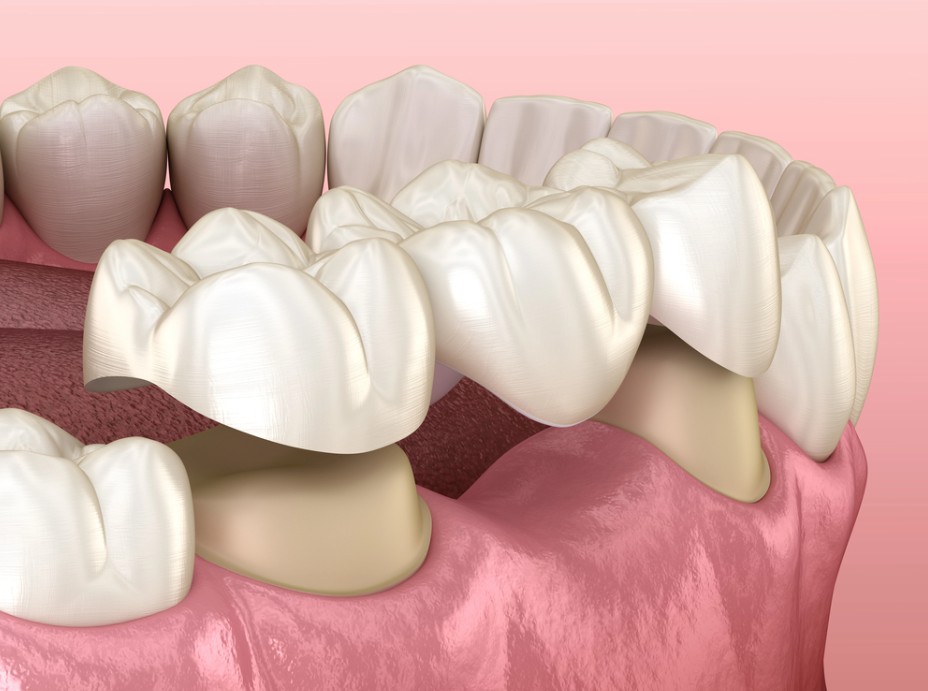
Like an architectural bridge spans a gap to connect two areas of land, a dental bridge spans the gap where a tooth was lost. A bridge may replace one tooth or up to three teeth in a row. To make a bridge, replacement teeth, called pontics, are set between two crowns. The crowns attach to healthy teeth to support the new bridge.
A custom-made, high-quality dental bridge restores continuity of pressures across a dental arch. It also closes the space left by the lost tooth, so surrounding teeth will no longer drift from proper alignment. Lastly, we craft dental bridges that look, feel, and function like natural teeth. Your all-white, unique smile can remain intact, so you’ll look healthy and attractive.
When Is a Dental Bridge a Smart Choice?
If you’ve lost up to three teeth in a row, Dr. Horblitt may discuss the option of a dental bridge with you. His recommendation will be based on bite mechanics, overall dental health, and long-term stability. In some cases, a traditional dental bridge is appropriate. This restoration is supported by the natural teeth on either side of the gap, which are prepared and fitted with crowns that anchor the artificial replacement tooth between them. For some patients, however, an implant-supported bridge may be recommended. This type of bridge is anchored to dental implants placed in the jawbone rather than attached to neighboring teeth, so adequate bone support is an important consideration.
How long do dental bridges last? With proper care and regular dental visits, many bridges last 15–20 years or longer.
Placement of a traditional bridge is a non-surgical procedure that results in a permanent, fixed restoration. With good oral health and consistent home care, many traditional bridges last 15 to 20 years or longer. Implant-supported bridges typically last 20 years or more because the implants function like artificial tooth roots embedded in the jawbone, helping preserve bone structure and providing strong support for the restoration. During your consultation, Dr. Horblitt will explain the advantages of each option and help determine which approach best protects your long-term oral health and bite stability.
The Cost of Waiting
Information is power. After tooth loss, you need to know the pros and cons of tooth replacement. If you opt to not replace a lost tooth or you plan to wait months or years before replacement, you could experience these issues:
- Neighboring teeth drift toward the space and may supraerupt on the opposing arch
- Bite misalignment
- Uneven tooth wear
- Increased plaque in tight spaces
- Higher risk of cracks, fractures
- Increased risk of additional tooth loss
- More complex treatments later
Replace the Gap, Protect the Oral System
A lost tooth affects much more than just your appearance. Dental bridges restore balance, stability, and chewing effectiveness. Replacing a lost tooth quickly helps protect the entire bite system, for optimal long-term oral health, beauty, and function. If you’ve lost one or more teeth, don’t delay; call Dr. Gary Horblitt’s prosthodontics and general dentistry office today at (203) 335-1011 to reserve your appointment.