Mild tooth discomfort or sensitivity can indicate that an existing restoration is no longer providing adequate support. It’s important to understand that small cracks, failing fillings, and cavities will not heal on their own. In fact, seemingly small tooth damage can progress quickly to more complex, painful, and expensive issues. In many cases, upgrading from a filling to a dental crown provides the structural reinforcement a weakened tooth requires. Dr. Gary Horblitt, your dentist in Fairfield, CT, takes a proactive, preventive approach that prioritizes patient comfort, as well as long-term oral health, stability, and esthetics.
Don’t allow a toothache to go unchecked. Call our Fairfield dental office today at (203) 335-1011 to schedule your appointment with Dr. Gary Horblitt, a general dentist and prosthodontist with vast experience. Dr. Horblitt will evaluate your mouth, imaging, and medical and dental history, as well as your personal preferences and experiences. He will educate you on the status of your oral health and recommend treatments and procedures to restore your mouth and smile.
How Fillings Work – and Their Limits
Dental fillings are fast and effective for replacing decayed enamel in mild to moderate cavities. Fillings are placed chairside in our office, with no waiting for a dental lab restoration. We use tooth-colored, custom-shaded bonding for dental fillings, so they look totally natural.
Large cavities reduce the structural strength of teeth and often require stronger restorations — dental crowns. Research shows that teeth with large fillings are more prone to fracture. Because teeth endure 150–200 pounds of bite force during normal chewing, their structure must remain strong.
Signs a Filling May Need Leveling Up
Dr. Horblitt looks for key issues to differentiate the need for dental fillings from the necessity of dental crowns. These include, but are not limited to:
- Cracks around existing fillings
- Recurrent decay at restoration margins
- Sensitivity to heat, cold, or pressure
- Visible structural breakdown
- Darkening beneath an existing restoration
Why Crowns Are Different
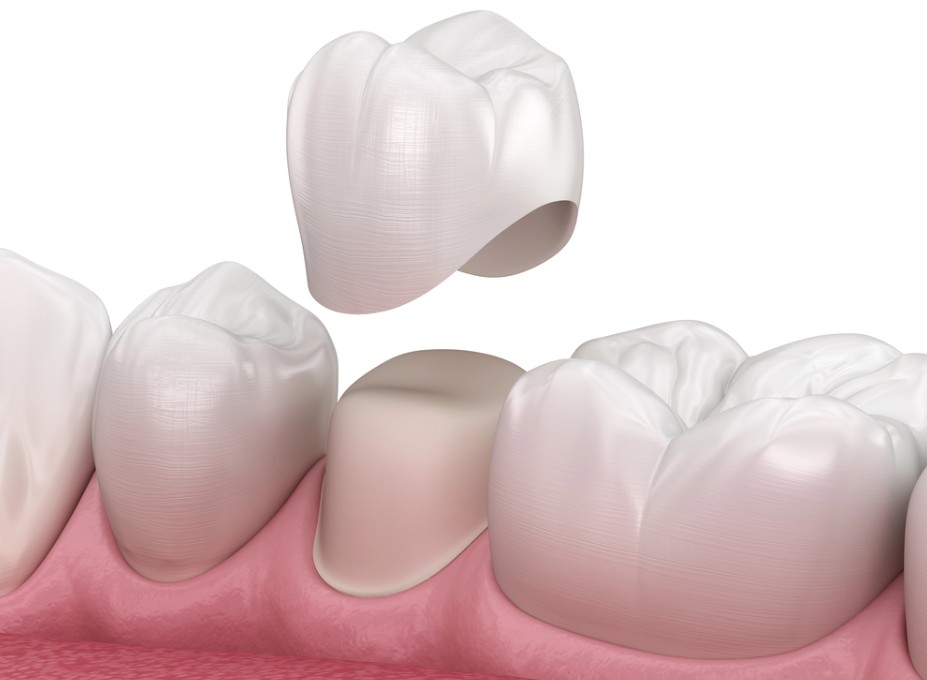
While a filling adds structure inside a cavity, a dental crown covers the entire visible portion of a tooth: all sides and surfaces outside the gums. It surrounds the tooth and delivers support as well as protection. Dental crowns are custom-fabricated in a dental laboratory to fully encase and protect weakened tooth structure. With a crown, your bite force will be properly redistributed, so other teeth do not have to take on additional workload in compensation for the damaged tooth.
This Is Not Overtreatment
In a way, dentistry is structural engineering. As damage to a tooth increases, the restoration must also level up to match the structural need. If you have a toothache from cavities or cracks, having dental crowns placed early can prevent future fracturing or the need for extraction.
Prevention Through Precision
When you visit Dr. Horblitt in our Fairfield, CT, dental and prosthodontic office, you can expect a comprehensive oral evaluation with bite analysis and imaging. Then the dentist will sit down with you to explain his findings and the state of your oral health. He will present treatment options to eliminate your pain and restore dental damage with long-lasting dental restorations, like dental crowns and fillings. Remember, early treatment will save you time, money, and discomfort. Call us now at (203) 335-1011 to reserve your appointment with Dr. Horblitt.